



Fire alarm maintenance
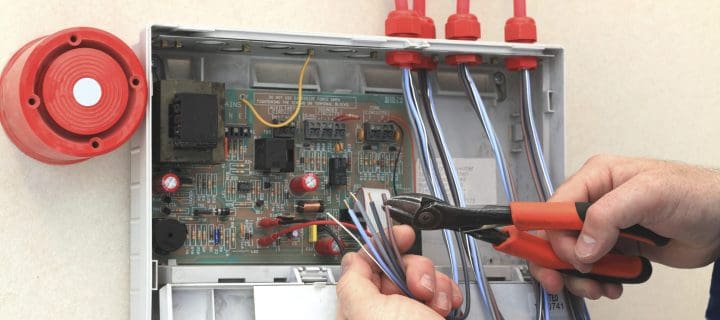
Fire alarm maintenance is a critical component of a comprehensive fire safety strategy. Regular fire alarm testing and maintenance ensure that your system is working properly, providing safety for occupants and protecting your property. Understanding the wider importance of fire alarm systems and keeping them properly maintained can help businesses protect occupants, maintain compliance and identify faults before they become more serious. Fire alarm maintenance is essential for several key reasons:
- Reliability: Regular maintenance ensures that fire alarms are always in proper working condition and ready to alert occupants in case of an emergency.
- Early detection: Well-maintained alarms are more likely to detect fires early, providing crucial time for evacuation and emergency response.
- Compliance: Regular maintenance helps meet legal and insurance requirements, avoiding potential fines, and ensuring that your property and strategy are compliant.
- Minimised false alarms: Proper maintenance reduces the likelihood of false alarms, which can be disruptive and costly.
- Longevity: Routine checks and servicing extend the lifespan of fire alarm systems, protecting your investment, and ensuring long-term safety.
We’re approved, third-party certified fire alarm specialists, providing businesses in our local areas of High Wycombe, Watford and Slough, as well as customers requiring fire alarm maintenance in Devon, with bi-annual service and maintenance in accordance with the BS 5839 guidelines. Thanks to the backing of the LS Fire Group and support of our partner brands, we’re able to provide our fire alarm maintenance services nationwide.
If you require a new fire alarm system, you need your current fire alarm servicing, or you just need a professional to give you some advice, give us a call on 0808 5015 856, or send our team a message through our contact form and we’ll get back to you as soon as possible.
You may also be interested in…
Maintenance services in High Wycombe, Watford, Slough, and nationwide
Our knowledge and expertise mean that if there’s an issue which could prevent your system from working, we’ll offer guidance and advice on the appropriate action to take.
If you require fire alarm system maintenance, give us a call on 0808 5015 856.
We also provide 24-hour emergency call outs, 7 days a week, 365 days a year, with response times in under 4 hours to locations across the UK thanks to the help of our partner brands and the backing of LS Fire Group. Our nationwide coverage includes businesses requiring fire alarm servicing in Suffolk, alongside customers in many other areas across the country. This means you can get a reactive service for issues which may occur between service periods. Fire alarms also form part of a wider approach to life safety within a building; if you’re responsible for multiple systems, our guide explains what is emergency lighting and why it is important when normal lighting fails.
Fire alarm system maintenance legal requirements
Preventative fire alarm system maintenance and fire alarm testing are not only requirements of current legislation but also ensure that your fire safety system provides continuous coverage and optimal performance. All our engineers are trained to service and maintain all types of equipment to the highest quality, regardless of the manufacturer.
The BS 5839 guidelines recommend that any fire alarm system should be inspected at least every 6 months.
Responsibility for fire safety can be a daunting prospect. No matter who you need to protect, how big or complex your building is, or what your risks are, we’re here to help. Those responsible for shared premises may also need to consider specific fire alarm requirements for multi-occupancy buildings as part of their wider fire safety responsibilities.
 0808 5015 856
Our FAQ’s
- What does fire alarm system maintenance involve?
- Fire alarm system maintenance includes a series of inspections, tests, and checks to ensure your system is fully operational. This typically involves checking detectors, control panels, sounders, call points, batteries, and wiring — all recorded to support compliance and due diligence.
- How often should fire alarm maintenance be carried out?
- Regular fire alarm maintenance should take place at least every six months by a competent engineer, with weekly basic checks and monthly functional tests conducted by your site team. This schedule helps ensure early detection of faults and ongoing reliability.
- What is fire alarm testing and why is it important?
- Fire alarm testing evaluates whether your fire alarm system activates correctly and communicates across all zones. Regular testing identifies faults early, reduces false alarms, and confirms your system will work as expected if a fire emergency occurs.
- Who is responsible for fire alarm system maintenance?
- Under UK fire safety law, the Responsible Person — often the facilities manager, building owner, or managing agent — must ensure that fire alarm system maintenance and testing are completed by qualified personnel and recorded properly.
- What are the legal standards for fire alarm maintenance?
- Fire alarm maintenance must comply with BS 5839‑1 and relevant UK fire safety guidance. This includes scheduled inspections, documented fire alarm testing, and professional servicing that keeps your system compliant with current regulations.
- How long does fire alarm maintenance take?
- The duration of a fire alarm maintenance visit depends on the type and size of your system. Small systems may take 1–2 hours, while larger or multi‑panel systems can take longer due to the thorough nature of fire alarm testing and inspection.
- Can I combine fire alarm maintenance with servicing for other safety systems?
- Yes — many organisations choose to schedule fire alarm system maintenance alongside checks for emergency lighting, extinguishers, or access control systems to simplify compliance and reduce disruption.
- What happens if a fault is found during fire alarm testing?
- If an issue is identified during fire alarm testing, a competent engineer will diagnose and recommend corrective action. This may include part replacement, recalibration, or rewiring to ensure your system remains reliable and compliant.