



Emergency Lighting Installation & Alarm Lighting Services for Compliance
Visibility in any emergency
Emergency alarm lighting installation
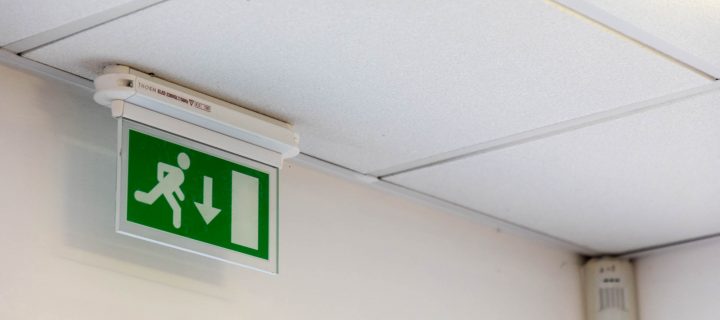
Emergency lighting installation is essential for safe evacuation during a power failure. Our team provides full installation services for alarm lighting systems and ensures compliance with UK emergency lighting regulations. To understand more about the role of fire safety lighting during an emergency, our guide explains how these systems support safe evacuation when normal lighting fails.
A power failure during an emergency can be dangerous, but with our emergency lighting installation services, this needn’t be a cause for concern. Emergency lighting helps reduce panic by illuminating evacuation routes during emergencies, ensuring compliance with UK emergency lighting regulations.
UK emergency lighting regulations (The Regulatory Reform (Fire Safety) Order 2005) states that commercial buildings must provide illumination for exits and emergency routes in the event of a power failure. An emergency escape lighting system should also be installed in areas where people may be working when there is no natural light, both internally and externally.
If your emergency lights need an upgrade, safety check, or you need new lighting for your building, call our team on 0808 5015 856 for a free quote. As we’re backed by the LS Fire Group, we can provide our emergency lighting services nationwide thanks to the help of our parter brands.
Our expert engineers can carry out emergency lighting installation for your premises – no matter how large or small – to help you stay legally compliant. We’re LPS 1014-certified and are an approved NICEIC contractor, plus we only use quality components to ensure you have an emergency lighting system in the right areas, which helps people when they need it most.
You may also be interested in…
Emergency Lighting Installation & Alarm Lighting Systems in High Wycombe, Watford, Slough, and Nationwide
Emergency lighting systems need planning and design, something we have the experience to deliver for any type of commercial property. Our engineers carry out work in line with BS 5266-1 to provide evacuation lights for hotels, hospitals, offices, retail units, and more in High Wycombe, Watford, Slough, and across the UK with the help of our partner brands and the backing of the LS Fire Group. For taller and more complex premises, our guide also looks at the considerations surrounding fire systems for high-rise buildings.
As well as designing and installing your emergency alarm lighting system, we can also provide emergency lighting repairs and maintenance to ensure your building is always compliant with regulations. We can also make recommendations on your current system as part of a fire risk assessment or simply provide a quote for emergency lighting separately.
Our emergency lighting solutions are designed to meet the specific requirements of diverse environments, from healthcare facilities and national retail and hospitality chains to managed estates and multi‑site portfolios. We ensure that your escape routes, stairwells, and communal areas are lit safely and effectively during power failure or fire incidents, helping you maintain compliance, protect occupants, and support clear evacuation strategies across all building types. For premises shared by multiple occupants, our guide explains the fire alarm requirements for multi-occupancy buildings alongside the emergency lighting measures that should also be considered.
To discuss our emergency lighting services in more detail, contact our team today or fill out our form and we’ll be in touch. We’re always happy to help you maintain compliance with industry standards.
Fire safety is a responsibility that never rests and we’re here to implement complete fire protection for your business. Get in touch with our industry-leading experts to learn how we prevent fires, protect lives, and ensure compliance for you.
 0808 5015 856
Our FAQ’s
- What is alarm lighting and how does it support fire safety?
- Alarm lighting — commonly referred to as emergency lighting — activates when normal power fails during a fire or emergency, helping occupants safely navigate escape routes. Properly installed alarm lighting is an essential part of any fire safety strategy and supports compliance with UK emergency lighting regulations.
- What does emergency lighting installation involve?
- Emergency lighting installation typically includes a survey of your premises, strategic placement of luminaires, testing of battery backup systems, and integration with your fire detection and alarm lighting systems. This ensures the right types of emergency lighting are in place for escape routes, high‑risk areas, and open spaces.
- What are the main types of emergency lighting?
- There are several types of emergency lighting, including: – Escape route lighting — illuminates paths to safety – High‑risk task area lighting — used where specific tasks require light after power failure – Open area (anti‑panic) lighting — helps prevent disorientation in large spaces – Standby lighting — supports normal activities when mains power fails
- Are there UK emergency lighting regulations I need to follow?
- Yes. Businesses must comply with UK emergency lighting regulations, including guidance in BS 5266, the Regulatory Reform (Fire Safety) Order 2005, and relevant Building Regulations. These standards detail where emergency lighting is required, how it should perform, and how it should be maintained.
- Who is responsible for emergency lighting installation and maintenance?
- Under UK fire safety law, the Responsible Person — often a facilities manager, building owner, or managing agent — must ensure compliant emergency lighting installation and ongoing maintenance, supported by regular testing and documented evidence.
- How often should emergency lighting be tested?
- Emergency lighting systems require routine testing to ensure reliability. Basic function tests should be performed weekly, and full duration tests (typically for battery backup performance) should be completed annually by a qualified engineer, in line with UK emergency lighting regulations.
- Can emergency lighting be retrofitted into existing buildings?
- Yes. Whether your building has outdated fixtures, new escape routes, or has undergone refurbishment, our team can design and deliver a compliant emergency lighting installation that meets your building use and fire safety needs, utilising the appropriate types of emergency lighting for each area.
- What happens if emergency lighting fails a test?
- If your emergency lighting fails during inspection, this could indicate a power backup, control gear, or battery issue. Failing to address these faults can result in non‑compliance with UK emergency lighting regulations. Our engineers can diagnose and rectify failures quickly to minimise risk and support your compliance obligations.